


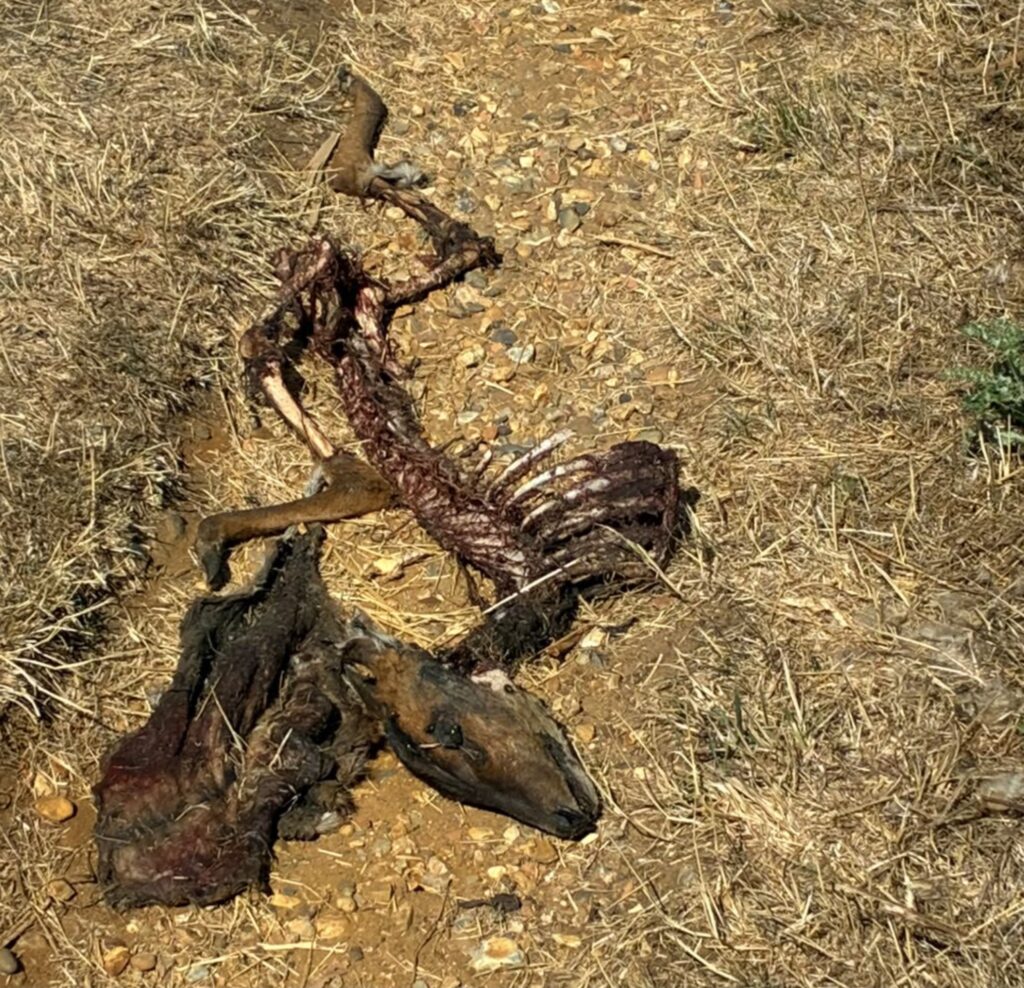
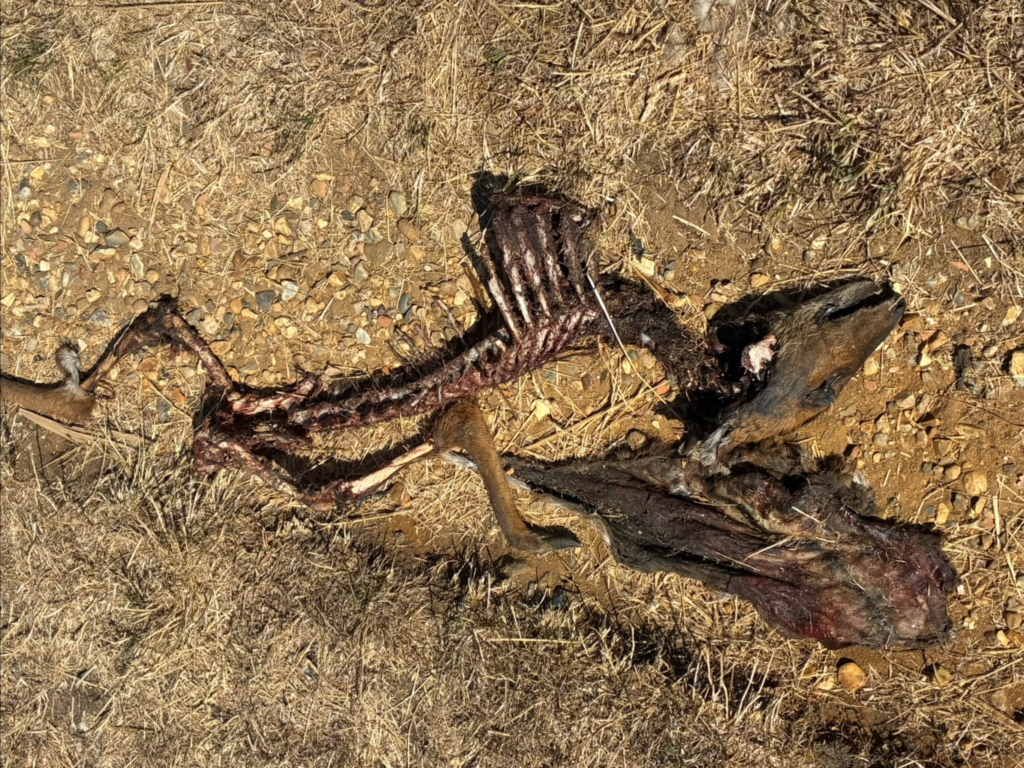
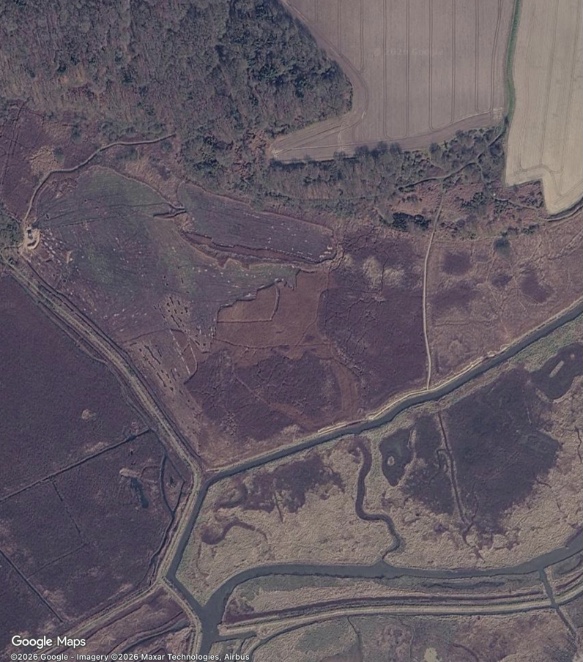
A relative sent me these two photos (above) of a muntjac carcass they found on the Dunwich to Walberswick coastal path (now the King Charles III Coastal Path) in the Suffolk coast on the morning of 11 August 2026. They photographed the muntjac corpse where they found it, on the path between the ruined windmill on Dingle Marshes and the start of the East Hill woods and Hoist Covert woods on the edge of Walberswick.
Particularly of interest to me was the way in which the spine and neck had been stripped clean and how some of the skin had been carefully removed. The front legs appear to be missing. The exposed flesh had dried out in the extreme heat.
This follows the discovery of another muntjac carcass nearby (but in a very different habitat) in the church cemetery at Dunwich in March 2026. (See here.) This showed clear signs of being a “likely” big cat kill, according to expert opinion I sought. While the Dunwich find was close to an area (Dunwich Forest) where deer are culled, butchered and buried, there are no deer culls anywhere near Walberswick or anywhere around the local marshes that I am aware of, and I live locally.
There are a lot of birds of prey round there, it being a nature reserve – including buzzards, marsh harriers, short-ears owls, sparrowhawks, peregrines, kestrels and hobbies. The precision with which the carcass had been predated on didn’t look to me like the work of birds of prey. So I ran the photos past the same experts.
Richard Freeman, a zoologist with the Centre for Fortean Zoology and a former zookeeper, replied:
“The muntjac carcasses (the Walberswick carcass and the one found in March nearby at Dunwich) remind me of a big ram carcass I examined years ago in North Devon. The skin was peeled back and the flesh and soft organs consumed with most of the bones left intact. The neck had been dislocated. It looked like leopard kills I’d seen in Africa.
These could well be big cat victims, though without a closer look at the bodies I can’t be sure. It looks like scavangers have been having a go at them too.”
Rick Minter, an ecologist with Royal Agricultural University Cirencester and host of the Big Cat Conversations podcast, told me that the evidence for predation in the photos of the recently found Walberswick muntjac carcass ticks some of the boxes that would make it more likely to be a big cat kill:
“I am certainly thinking that carcass is cat related, just a few key points… Jaw bone looks ‘catty’ with (a) chip out of it so (that) rules out birds, but they (birds of prey) can still pick away…. Intact shed skin peeling is a tick for cat.
Rib impacts are a tick.
Leg detail of consumption very characteristic of fresh cat consumption… A carcass in heat will dry out in hours.”
The location where the corpse was found would make an ideal ambush site for a big cat, near the Dunwich River and its sluices where deer would come to drink, also very near a reedbed that would provide cover.
With thanks to Luke Reilly, Richard Freeman and Rick Minter.